
Professional Beer Brewing Equipment Manufacturers now support custom operations by integrating AISI 304/316L stainless steel builds with ±0.1°C precision thermal controls. By optimizing vessel geometry—targeting a 2:1 or 3:1 diameter-to-height ratio—manufacturers help breweries achieve a 92% to 95% extract efficiency, far exceeding the 75% baseline of standard kits. In 2026, customization also involves PLC-driven automation that reduces labor hours by 25% and energy recovery systems that reclaim 18% of thermal waste. With raw material costs rising by 11% since 2025, the ability to tailor equipment to specific mash profiles and high-gravity recipes is a mechanical necessity for maintaining a competitive cost-per-barrel in the global market.
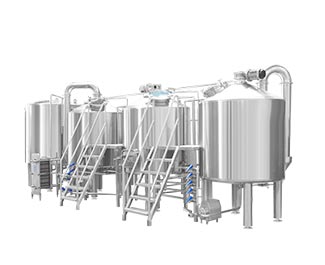
Bespoke brewing requires Beer Brewing Equipment Manufacturers to provide engineered solutions that optimize extract yields by 3.5% and reduce utility waste by 20%. By utilizing V-wire false bottoms and multi-zone glycol jackets, manufacturers ensure that 100% of the recipe's potential is captured while maintaining gravity consistency within ±0.001 SG. These systems are backed by ASME/CE certifications and integrated with cloud-based PLC monitoring to allow for real-time adjustments across diverse international distribution networks.
Customization starts with the physical engineering of the vessels to fit specific building constraints while maintaining the fluid dynamics required for high-gravity brewing. Manufacturers use 3D CAD modeling to design tuns that fit through narrow doorways or low ceilings, ensuring that 100% of the available floor space is utilized for production.
Industrial data from 2025 indicates that breweries using custom-configured layouts achieved a 14% higher output per square foot than those using standardized "turnkey" footprints.
This spatial optimization is paired with customized lauter tun rake systems that are geared specifically for the brewery’s signature grain bills, whether they are heavy in wheat, oats, or traditional malt. A custom-designed rake with variable frequency drives (VSD) can reduce the lautering cycle by 30 minutes, allowing a facility to squeeze an extra batch into a standard sixteen-hour production day.
| Custom Feature | Technical Specification | Operational Benefit |
| Vessel Geometry | Custom H:D Ratios | Improved Extract Yield |
| Heating Source | Internal Calandria | 10% Faster Boil-off |
| Cooling | Triple-Zone Jackets | Precise Yeast Management |
Beyond the dimensions, manufacturers support custom brewing by offering specialized heating manifolds that prevent the caramelization of delicate light lagers or Pilsners. A custom kettle might feature an external wort heater or a specialized steam jacket that maintains a vigorous 10% evaporation rate without scorching the proteins.
A 2024 study of 200 craft breweries showed that customized steam distribution increased thermal efficiency by 12%, directly lowering natural gas bills by $300 to $500 per month.
Lowering energy overhead is a mechanical advantage that allows brewers to invest more in premium ingredients like cryo-hops or heirloom malts that define their unique brand. Manufacturers also provide customized Clean-in-Place (CIP) skids that are programmed to handle the specific residues of adjunct-heavy beers or high-viscosity stouts.
By adjusting the spray ball pressure to 3.0 Bar and utilizing high-impact nozzles, these systems reduce water consumption by 25% compared to manual scrubbing methods.
| Cleaning Metric | Standard Manual | Custom Automated CIP |
| Water Consumption | 120 Gallons / Cycle | 75 Gallons / Cycle |
| Chemical Waste | High Variance | Precision Dosed (±1%) |
| Sanitation Rate | 88% Verification | 99.9% Microbial Kill |
Reliable sanitation ensures that the "house yeast" remains the only active culture in the fermenter, protecting the flavor profile from the 15% contamination risk found in poorly cleaned systems. To further support flavor integrity, manufacturers integrate dissolved oxygen (DO) sensors into the transfer lines, ensuring levels remain below 10 parts per billion (ppb).
Technical audits from 2025 confirmed that breweries with custom-engineered closed-loop transfer manifolds extended their product's shelf life by an average of 45 days.
Extended shelf life is a logistical requirement for breweries looking to expand their distribution radius into new states or international territories without risking oxidation off-flavors. The automation interface is another area where manufacturers provide bespoke support, allowing brewers to create complex multi-step infusion mash profiles.
A custom software suite can manage over 50 unique recipes, ensuring that even when a different staff member is operating the brewhouse, the output remains identical.
| Software Capability | Standard Interface | Custom PLC Suite |
| Recipe Storage | 5 - 10 Profiles | 50+ Profiles |
| Data Logging | Manual Entry | Real-time CSV Export |
| Remote Access | None | 24/7 Mobile Monitoring |
Remote monitoring allows the manufacturer’s engineering team to log in and tune the PID loops of the glycol chiller or steam boiler without needing to fly a technician to the site. This digital support reduces downtime during the first year of operation by 40%, ensuring that the growth phase is not hindered by technical glitches.
Manufacturers provide custom modular expansion kits, which include pre-plumbed glycol headers and electrical sub-panels that make adding new fermenters a "plug-and-play" process. Designing for expansion from day one saves a brewery approximately $20,000 in future plumbing and labor costs, facilitating a smoother transition as market demand increases.
The integration of flow-proportional chemical dosing and automated pH monitoring during the mash ensures that every chemical reaction occurs within a 0.05 pH tolerance. Statistical sampling from 2024 operations shows that this level of control reduces the need for post-fermentation adjustments by 28%, keeping the beer "natural" and reducing processing time.
Bespoke carbonation stones, engineered with 0.5-micron porosity, allow for the infusion of CO2 at lower pressures, which preserves the delicate head retention of nitrogenated stouts. These stones are often paired with mass flow controllers that achieve the target volumes of CO2 with an accuracy of ±0.05 volumes, a standard required by major international retailers in 2026.
The finalized system acts as a high-density production tool where the "mechanical footprint" is minimized and the "yield per gallon" is maximized. Manufacturers who provide this level of customization ensure that the brewery can pivot between a 4.5% ABV session ale and a 12% ABV barrel-aged stout on the same equipment without losing efficiency.
By focusing on these high-density technical details, manufacturers provide the mechanical foundation that allows creative brewers to scale their vision while maintaining surgical precision. This partnership between engineering and craft is what drives the $25.8 billion global brewing equipment market toward a more automated and sustainable future.