
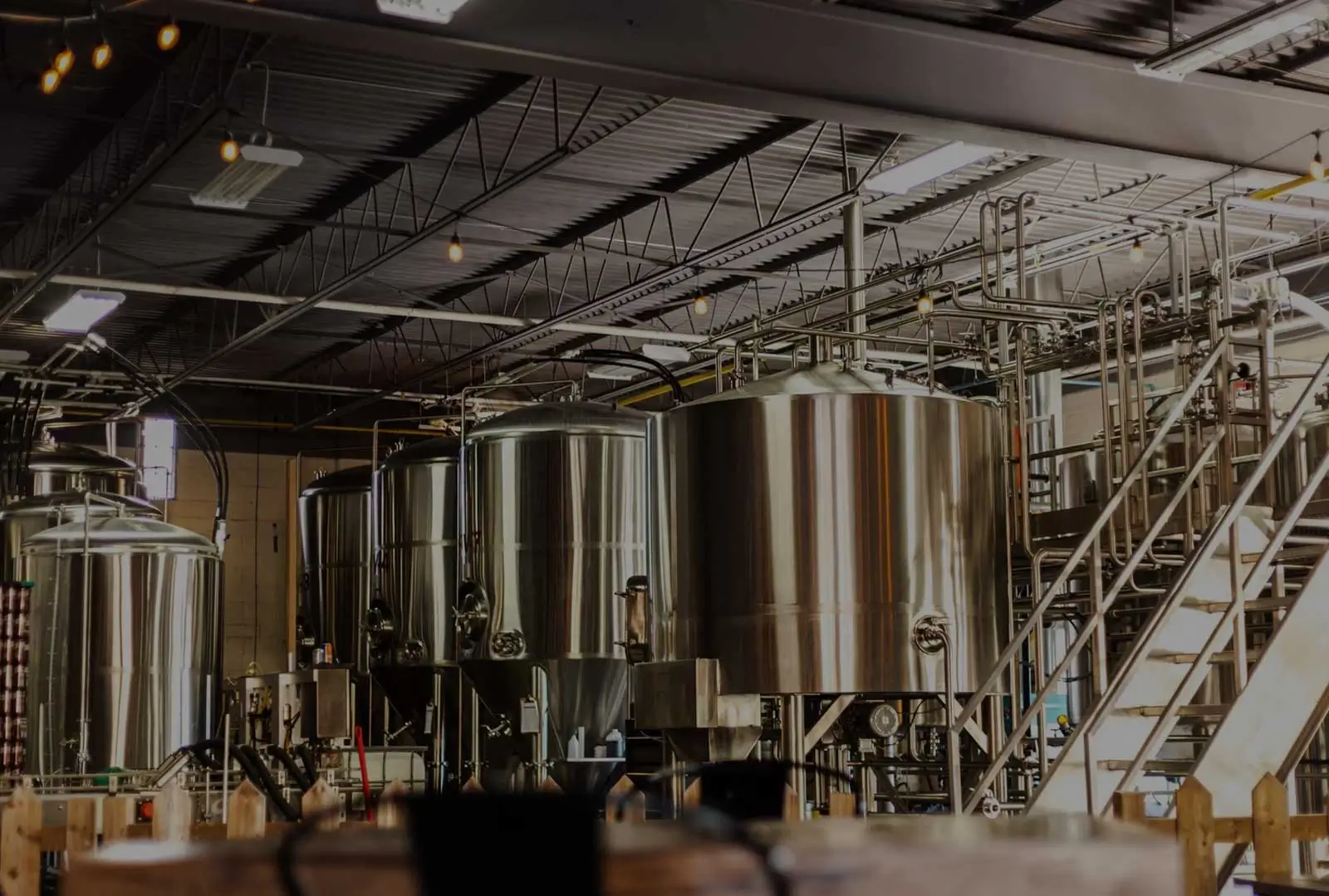
Top-tier Beer Brewing Equipment Manufacturers provide scalable solutions by utilizing standardized modular components, such as 304/316L stainless steel piping manifolds and universal sensor ports, which facilitate seamless transitions from 1bbl pilot units to 100bbl production vessels. These companies ensure structural consistency through ASME pressure vessel certification and repeatable weld penetration standards, allowing a brewery to maintain operational procedures—such as CIP cycles and mash profiles—across a 100-fold increase in batch volume. Their engineering teams integrate scalable PLC logic, enabling brewers to expand from manual valve manipulation to full-scale automated ingredient handling and temperature control.
Engineering a system that scales effectively requires a deep understanding of thermodynamics, as the surface-area-to-volume ratio changes drastically between a 1bbl tank and a 100bbl vessel. Manufacturers must adjust jacketed heating zones to ensure that heat distribution remains uniform, preventing localized scorching in smaller batches while maintaining rapid ramp-up times in industrial-sized setups. In 2025, industry benchmarking showed that systems designed with high-efficiency calandrias reduce energy consumption by 18% when transitioning to 50bbl+ capacities.
Modular brewhouses allow for the addition of secondary hot liquor tanks or whirlpool vessels as production demands increase, typically requiring only minor logic adjustments to the existing control interface.
Maintaining a consistent surface finish is mandatory for hygiene, with manufacturers adhering to Ra 0.4 micron internal polishing to prevent biofilm formation. When scaling to 100bbl, the structural load increases significantly, requiring engineers to conduct Finite Element Analysis (FEA) on tank legs and support structures to ensure they can withstand 30,000+ kilograms of weight under full operational capacity.
| Capacity Range | Heating Method | Automation Level |
| 1bbl - 5bbl | Electric / Steam | Manual / Semi-Auto |
| 10bbl - 30bbl | Steam | Semi-Auto / Full-Auto |
| 40bbl - 100bbl | Steam / Direct Gas | Fully Integrated PLC |
Once the physical hardware is finalized, the software architecture must accommodate the shift from manual batch logging to digital data acquisition. Manufacturers implement non-proprietary control systems that allow for the storage of 5,000+ historical brewing cycles, providing operators with the granularity needed to replicate flavor profiles across different system sizes.
Data integrity is protected by implementing redundant I/O modules, which ensure that sensor drift remains below 0.2% even when operating in high-humidity fermentation zones for over 8,000 hours annually.
Piping infrastructure design also shifts during the transition to larger scales, as fluid dynamics become more complex within the longer runs required for a 100bbl facility. Engineers employ computational fluid dynamics (CFD) modeling to verify that wort flow velocities remain within 1.5 to 2.0 meters per second, which is necessary for effective lautering and whirlpool separation without shear stress.
When integrating equipment for large-scale operations, technicians perform rigorous hydrostatic testing at 1.5 times the maximum allowable working pressure (MAWP). This process is documented for every unit shipped, providing a 100% success rate verification for weld seams and gasket seals before the equipment leaves the fabrication floor.
Post-installation validation includes a 48-hour continuous operational test, where the system must successfully manage three consecutive full-capacity boils without a single valve actuator failure or temperature fluctuation exceeding 0.5°C.
The procurement of such systems involves evaluating the manufacturer's supply chain transparency, particularly regarding the certification of raw materials. Reliable suppliers provide chemical composition reports for every sheet of stainless steel, ensuring that alloy content—specifically nickel and molybdenum percentages—meets international standards for durability in brewing environments.
As production volumes grow, the need for efficient grain handling becomes more pronounced, often requiring the integration of pneumatic or mechanical augers. Manufacturers design these systems to handle 500+ kilograms of malt per cycle, integrating weight-sensing load cells into the silo and grist case to ensure precision within 0.1% accuracy.
Calibration of these instruments is necessary to maintain quality, with manufacturers recommending a bi-annual audit of all mass-flow meters and thermal probes. This proactive maintenance schedule preserves the integrity of the original system configuration, ensuring that the performance observed during the initial 1bbl trial remains consistent even at the 100bbl scale.
Lifecycle support includes the availability of spare parts for at least 15 years, ensuring that control boards, pump seals, and valve actuators remain interchangeable across all system capacities provided by the manufacturer.