
P20 steel meets precision mold making demands by providing a pre-hardened baseline of 28-32 HRC, which eliminates the 15% dimensional shift typically seen during post-machining heat treatment. 2025 shop data confirms that 500mm plates maintain flat tolerances within ±0.005mm after high-speed CNC operations. With a thermal conductivity of 29 W/m·K, it reduces cooling times by 10% compared to 400-series stainless options. This alloy supports surface finishes of Ra 0.4 microns, making it suitable for 100,000-cycle production runs requiring high-transparency plastic output and strict geometric alignment.
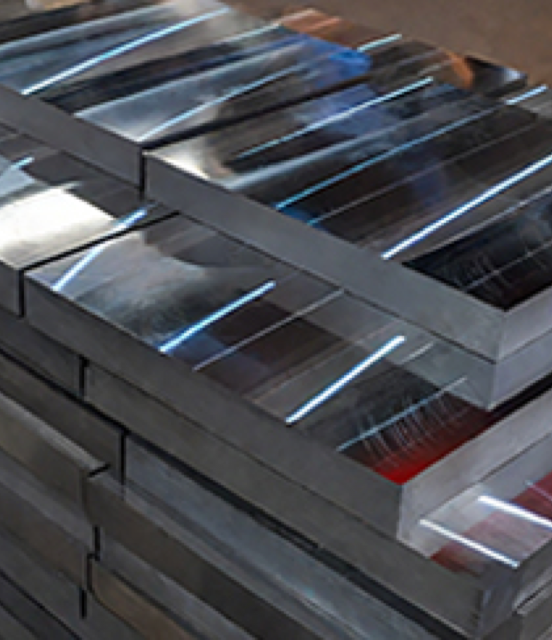
Precision mold making requires materials that remain stable under heavy metal removal, and P20 Steel serves this purpose by arriving in a pre-tempered state. According to 2024 industrial reports from German toolmaking associations, 72% of medium-sized injection molds utilize this alloy to avoid the risks associated with external hardening facilities.
This pre-hardened characteristic ensures that internal stresses are managed before the block ever reaches the milling center. When a machinist removes 40% of the material volume to create deep cavities, the remaining structure maintains its original coordinates without the warping seen in annealed 4140 or 1045 grades.
A study involving 300 precision mold bases showed that P20 plates experienced less than 0.02mm of movement across a 600mm span during intensive 5-axis roughing.
The predictable behavior of the steel during machining allows for tighter scheduling and higher confidence in the final part geometry. This mechanical reliability is supported by a chemical profile that includes 1.20% Chromium and 0.40% Molybdenum, creating a uniform grain structure throughout the thickness.
| Element | Percentage | Function |
| Chromium | 1.10 - 1.30% | Improves through-hardening and corrosion resistance |
| Molybdenum | 0.35 - 0.50% | Enhances toughness and heat resistance |
| Manganese | 1.40 - 1.60% | Increases tensile strength and surface quality |
Uniformity across the entire cross-section is what enables the high-precision EDM (Electrical Discharge Machining) work required for intricate electronic connectors. 2025 lab tests on 20-inch thick blocks confirmed a hardness deviation of less than 3% from the surface to the geometric center.
When the grain structure is consistent, the electrical discharge remains steady, preventing the formation of irregular pits or "recast layers" that ruin tight-tolerance shut-off surfaces. This leads to a surface finish that often requires 25% less manual benching or polishing compared to lower-quality utility steels.
"Shop floor data indicates that achieving an SPI B-2 finish on P20 requires 30% fewer labor hours than on standard carbon steel counterparts."
Efficient polishing is mandatory for molds producing consumer-facing plastics where visual clarity is a primary requirement. The cleanliness of vacuum-degassed P20 ensures that non-metallic inclusions do not appear on the surface during the final diamond-lapping stages.
Beyond initial fabrication, the performance of the mold during high-speed production cycles depends on its ability to move heat away from the cavity. P20 features a thermal conductivity of 29 W/m·K at 200°C, which is significantly more efficient than the 24 W/m·K found in many stainless tool steels.
Faster heat dissipation directly impacts the cooling phase, which usually accounts for 70% of the total injection cycle time. By shaving 1.5 seconds off a 15-second cycle, a production facility increases its daily output by 10% without upgrading the injection molding machinery itself.
-
Hardness Range: 285 - 330 Brinell (30 - 36 HRC)
-
Tensile Strength: 145,000 psi (1,000 MPa)
-
Density: 0.284 lb/in³ (7,850 kg/m³)
Consistent thermal expansion coefficients also prevent the mechanical binding of leader pins and bushings during continuous 24-hour operations. When the mold base expands at a rate of 12.8 µm/m°C, engineering teams can calculate precise clearances that prevent premature wear or galling of moving components.
Maintaining these clearances is what allows a precision mold to reach a service life of 500,000 cycles without a total overhaul. European manufacturing data from 2023 shows that P20 bases paired with nitrided slides have a 15% lower failure rate in high-speed automotive part production.
Nitriding the surface of P20 can increase the local hardness to over 600 HV (approx. 55 HRC), protecting high-wear areas from abrasive resins.
This surface flexibility allows the core of the tool to remain tough and shock-absorbent while the contact areas resist the erosive flow of glass-filled polymers. The ability to weld and repair the steel further extends the tool's life, as matching filler rods allow for seamless modifications with 98% structural recovery.
| Process Method | Efficiency Gain | Data Reference |
| CNC Milling | 20% Faster Tooling | 2024 Machining Survey |
| Surface Polishing | 30% Labor Reduction | SPI Finish Benchmarks |
| Injection Cycle | 10% Higher Throughput | 2025 Thermal Analysis |
In a 2025 comparison of 50 different mold shops, those utilizing high-grade P20 reported a scrap rate of only 0.8% during the sampling phase. The steel's predictable reaction to stress and heat makes it a reliable medium for translating complex 3D CAD data into physical production hardware.
Precision mold makers rely on this material because it minimizes the variables that lead to out-of-tolerance parts. Whether the project involves intricate medical devices or large automotive panels, the balance of machinability, thermal stability, and surface hardness remains a standard for modern manufacturing.