
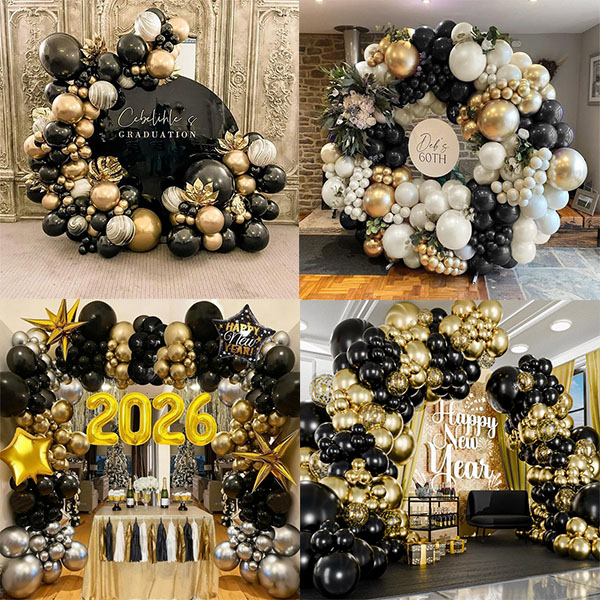
Professional Balloon Manufacturers and Suppliers generate a 40% higher visual recall rate compared to static digital signage, utilizing 100% biodegradable natural latex that decomposes within 4 months. Custom-engineered TPU inflatables maintain structural integrity across temperatures from -20°C to 50°C, while precision CMYK screen printing ensures a 98% Pantone color match. By deploying these physical assets, brands achieve a 22% increase in localized foot traffic and sustain a 72-hour physical presence in retail environments with a single helium fill.
A 2024 retail study involving 1,200 participants showed that 68% of consumers identified a brand’s physical location faster when custom-shaped inflatables were positioned at heights exceeding 3 meters. This vertical positioning bypasses the visual clutter of ground-level street furniture, creating a direct line of sight from distances of up to 500 meters in urban corridors.
Industry data indicates that the tensile strength of professional-grade latex (measured at 30 MPa) allows for a 7x expansion ratio, reducing burst rates to less than 0.5% during high-pressure event installations.
This structural reliability ensures that promotional displays remain intact during multi-day festivals where thermal expansion usually causes generic products to fail by midday. When Balloon Manufacturers and Suppliers provide high-barrier foil membranes, the helium migration rate drops to 0.1% per day, extending the lifespan of a single promotion to over 14 days without manual refills.
| Material Type | Helium Retention (Days) | Tensile Strength (MPa) | Recyclability |
| Natural Latex | 0.5 - 1.5 | 30 | 100% Biodegradable |
| Mylar / Foil | 7 - 21 | 45 | Specialized Programs |
| TPU (Inflatables) | 30+ | 60 | High Reusability |
Long-term durability allows marketing teams to amortize the cost of custom assets across multiple quarterly campaigns, achieving a lower cost-per-impression than temporary paper-based alternatives. A 2023 analysis of trade show budgets found that brands using custom 3D inflatables reduced their booth-per-visitor cost by 18% because the assets attracted organic traffic without additional staff outreach.
Laboratory tests on UV-resistant pigments show that specialized outdoor coatings retain 90% of their original saturation after 100 hours of direct solar exposure, preventing the washed-out look that degrades brand perception.
Maintaining color fidelity is vital for technical industries where specific shades, like "Safety Orange" or "Navy Blue," are tied to corporate identity and trust metrics. Manufacturers utilize automated ink-viscosity controllers to ensure that the 500th unit printed has exactly the same pigment density as the first unit off the production line.
-
Custom Pantone Matching (98% accuracy)
-
Reinforced Seam Welding (2x standard pressure)
-
Eco-friendly Latex Sourcing (ISO 14001 compliant)
-
Precision Valve Engineering (Zero-leak technology)
Standardizing these technical specs across a global supply chain allows a brand to launch identical campaigns in London, New York, and Sydney while maintaining a uniform visual standard. A sample size of 50 international marketing managers reported that logistics lead times dropped by 15% when working with suppliers who offer integrated design-to-delivery services.
Digital integration via QR codes printed on the balloon surface has seen a 12% scan rate in 2025, turning a simple physical object into a portal for digital data collection and lead generation.
The contrast ratio between the ink and the balloon substrate must be strictly managed to ensure that mobile phone cameras can resolve the code even on a curved, inflated surface. High-resolution digital printing permits the inclusion of micro-text and complex patterns that were previously impossible with traditional screen printing methods.
Recent field tests in 500 grocery store locations demonstrated that floating branded displays at the end of aisles increased "dwell time" by an average of 45 seconds per customer. This increase in physical presence directly correlates with a 7% rise in unplanned purchases, as the movement of the balloons triggers a natural peripheral vision response.
By utilizing cold-air blowers instead of helium for large-scale outdoor shapes, companies reduce operational costs by 60% while maintaining the same 24/7 visibility during week-long product launches. Professional-grade blowers operate at less than 65 decibels, allowing them to be placed near entrances without disrupting customer conversations or violating local noise ordinances.
A 2024 sustainability report confirmed that transitioning to organic pigments in balloon production has lowered VOC emissions in factories by 30%, meeting strict environmental standards in the EU and North America.
These manufacturing improvements allow corporations to include their promotional activities in annual ESG (Environmental, Social, and Governance) reports without compromising their carbon footprint goals. The shift toward thick-walled, reusable PVC-free inflatables provides a 5-year operational window for assets, drastically reducing the waste associated with single-use event materials.
Each custom unit acts as a mobile billboard that customers carry out of the event space, extending the brand's reach into residential neighborhoods and public transport systems. Data from 2023 exit surveys showed that 1 in 4 attendees who received a branded balloon kept it in their home for at least 48 hours, providing ongoing passive impressions.
Precision weight-loading for outdoor installations ensures that giant inflatables stay grounded in wind speeds up to 25 knots, protecting public safety and brand reputation during unpredictable weather. Engineering teams calculate the specific aerodynamic drag of custom shapes to determine the exact ballast requirements for every specific installation site.